
Summary:
Most people who lose fish in their first year didn’t buy bad fish. They bought the wrong fish for the wrong tank from someone who didn’t ask enough questions. It’s a pattern we’ve seen play out hundreds of times across Long Island — a beautiful acrylic tank, a well-meaning trip to the pet store, and then a slow, frustrating string of losses that kills the hobby before it ever gets going.
This page is for the person who wants to get it right the first time. We’ll walk you through the top acrylic aquarium manufacturers, the freshwater fish that are genuinely easy to keep, and how to avoid the mistakes that trip up most beginners in Nassau County and across Long Island.
Easiest Fish for Beginners: What Actually Works in a Home Aquarium
There’s no shortage of opinions on which fish are “easy.” The problem is that most of that advice comes from people trying to sell you something, not from someone who’s maintained hundreds of tanks across Nassau County homes, offices, and medical practices for the past two decades.
The fish that consistently work for beginners share a few key traits: they tolerate water parameter fluctuations, they eat reliably, they don’t require a species-specific setup, and they coexist peacefully with other community fish. That last point matters more than most beginners realize. A tank full of fish that fight is a tank full of stressed fish — and stressed fish get sick.
The species that check all those boxes most reliably are guppies, bettas, neon tetras, corydoras catfish, mollies, platies, and zebra danios. Each one has its own personality and care requirements, but all of them are genuinely forgiving for a first-time keeper.
Easiest Freshwater Fish to Care For: Species That Forgive Beginner Mistakes
Guppies are the species we recommend most often to first-time aquarium owners, and for good reason. They’re hardy, colorful, active, and tolerant of the kind of minor water chemistry swings that are almost inevitable when you’re still learning the rhythm of a new tank. They do well in groups, they’re peaceful with most community fish, and they’re widely available. The one thing beginners don’t always expect: guppies breed readily. A pair quickly becomes a colony, and an overstocked tank is one of the fastest ways to crash water quality. Go in knowing that, and you’ll be fine.
Neon tetras are the other species that comes up constantly. They’re small, they school in coordinated groups of six or more, and under good aquarium lighting they genuinely glow — which is part of why beginners fall in love with them. They prefer slightly soft, slightly acidic water, which is worth knowing if you’re on Nassau County tap water drawn from the Long Island aquifer system. That water tends to run harder and more mineral-rich than what tetras prefer in the wild. It’s not a dealbreaker, but it’s the kind of local detail that makes a real difference in long-term fish health — and it’s the kind of thing we flag for you upfront, where a national retailer simply won’t.
Corydoras catfish are the underrated pick. They’re peaceful bottom dwellers that clean up uneaten food, they’re nearly impossible to stress out, and they complement mid-water schooling fish like tetras and guppies perfectly. Most beginners overlook them in favor of flashier species, then discover them six months in and wish they’d started with a small group from day one.
Bettas deserve their own note. They’re genuinely easy to care for — low feeding demands, adaptable to a range of water conditions, and visually stunning. But they’re not community fish in the traditional sense. A betta in the wrong tank with the wrong neighbors will be stressed, aggressive, or both. Keep them with peaceful, short-finned species and they thrive. Put them with fin-nippers or other bettas, and you’ll have a problem within days.
Easiest Freshwater Fish to Breed: Where to Start If You Want to Try It
Once you’ve kept fish successfully for a few months, the next natural question is whether you can breed them. For most hobbyists, that curiosity starts with livebearers — fish that give birth to live, free-swimming fry rather than scattering eggs. Guppies, mollies, and platies all fall into this category, and all three will breed in a home aquarium without much encouragement from you.
Guppies are the easiest starting point. A healthy male and female will produce fry regularly, and the fry are large enough at birth to eat commercially available fry food without any special preparation on your end. The main challenge isn’t getting them to breed — it’s managing the population once they do. Fry that aren’t separated from adults are often eaten, which naturally limits the population in a community tank. If you want to raise fry intentionally, a small dedicated breeding tank with a sponge filter and some dense plant cover makes the process straightforward.
Mollies are similarly easy and slightly larger, which makes them a good choice if you want fry that are a bit easier to observe and manage. They prefer slightly harder, slightly alkaline water — which, incidentally, is close to what naturally comes out of Nassau County taps. That’s one of the reasons mollies do so well in Long Island home tanks without much water chemistry intervention.
For hobbyists who want to move beyond livebearers, corydoras are the classic next step into egg-laying species. They breed in response to water temperature drops — simulating a rainy season — and scatter adhesive eggs on flat surfaces and plant leaves. The eggs hatch in a few days, and the fry are small but manageable. It requires a bit more attention than livebearer breeding, but it’s a satisfying challenge for someone who’s ready to go deeper into the hobby.
The one consistent mistake beginners make with breeding is not having a plan for the fry. Guppies especially can produce dozens of offspring per month. Without a second tank, a grow-out plan, or a local fish store willing to take surplus stock, you can end up with a serious overstocking problem faster than you’d expect.
Easiest Aquarium Pets Beyond Fish: Snails, Shrimp, and What Works in a Community Tank
Fish get most of the attention, but some of the most rewarding aquarium inhabitants aren’t fish at all. Mystery snails, nerite snails, cherry shrimp, and ghost shrimp are all genuinely low-maintenance, visually interesting, and compatible with most peaceful community fish setups. They also serve a practical function — snails graze on algae, shrimp pick at detritus and uneaten food, and both contribute to a cleaner, more balanced tank ecosystem.
For beginners who want to add variety without adding complexity, a small group of cherry shrimp or a pair of mystery snails is an easy win. They don’t compete with fish for food, they don’t require special water parameters, and they add movement and color to the lower levels of the tank that fish often ignore.
Top 10 Acrylic Aquarium Manufacturers Worth Knowing About
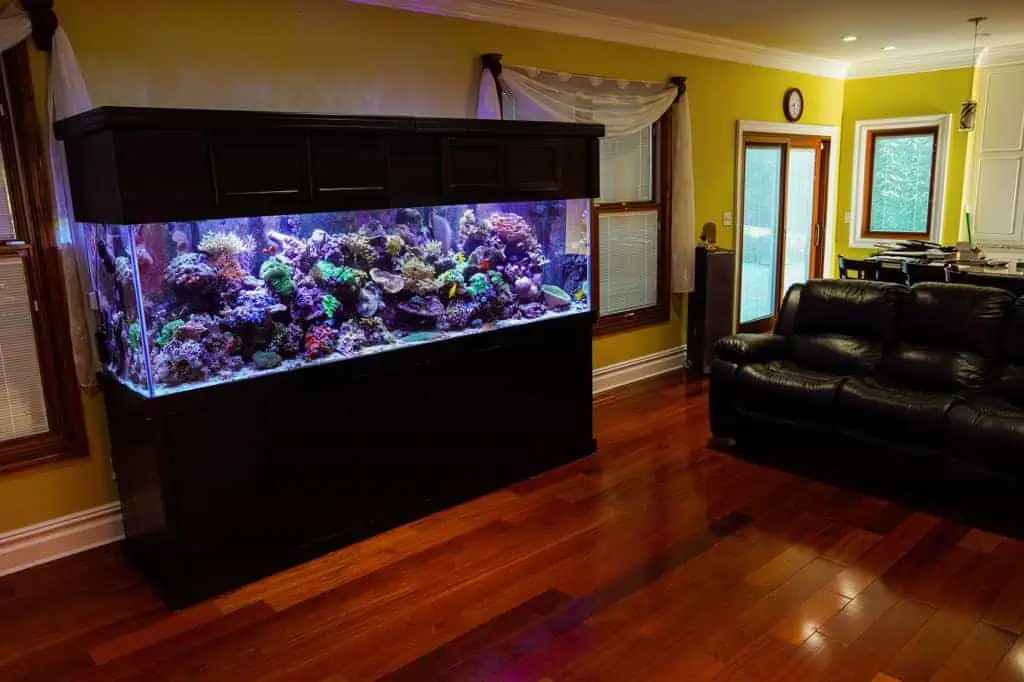
If you’re in the market for a custom acrylic aquarium, the manufacturer you choose matters considerably more than most buyers realize going in. Acrylic fabrication quality varies widely — and the difference between a tank built with premium material, CNC-cut joints, proper solvent welding, and in-house leak testing versus one that isn’t is the difference between a display piece that lasts decades and one that develops problems within a year.
The manufacturers we consistently recognize in the industry for doing this well include Titan Aquatic Exhibits, which brings nearly 60 years of combined fabrication experience and employs a dedicated in-house engineer for complex builds. Midwest Custom Aquariums positions itself as the fabricator rather than the middleman — they use premium acrylic sheet brands like Polycast, Roehm, Chemcast, and Reynolds, and handle every step of fabrication in-house. Advanced Acrylics serves both saltwater and freshwater applications with a strong custom focus and nationwide shipping. Plastic-Craft Products, based in West Nyack, NY — roughly 30 miles from Nassau County — operates a 33,000-square-foot facility with CNC cutting, solvent welding, polishing, and leak testing all under one roof, making them one of the closest high-quality fabricators to the Long Island market.
Beyond those, SeaQuatic Aquariums, Living Color Aquariums, Clearwater Aquariums, Blue Planet Aquariums, Tenecor Aquariums, and AcrylicPros round out a list of manufacturers with demonstrated track records in both residential and commercial custom builds. What they share: in-house fabrication, material quality standards, and a design process that starts with your space and your fish — not just a catalog of standard sizes.
When you’re evaluating any manufacturer, the questions that matter most are whether they fabricate in-house or outsource steps, which acrylic brands they use, whether leak testing is standard before delivery, and whether they have experience with builds comparable in scale and complexity to what you’re planning. Lead times are also worth asking about directly — large commercial projects at some manufacturers can push back smaller residential orders by weeks.
What Nassau County Homeowners Should Know Before Buying a Custom Acrylic Tank
Choosing a manufacturer is one part of the equation. Knowing what you’re actually getting into as a Nassau County homeowner is the other part — and it’s where a lot of buyers get caught off guard.
Acrylic tanks are significantly lighter than glass tanks of equivalent size, which matters more than people expect. A large glass aquarium in an older Nassau County home, installed on an upper floor or in a room without reinforced flooring, can create real structural concerns. Acrylic eliminates most of that worry. It’s also optically clearer than glass at larger thicknesses, and it can be formed into curved and non-rectangular shapes that glass simply can’t accommodate — which is why most architectural and built-in aquarium installations default to acrylic.
The scratch question always comes up. Yes, acrylic scratches more easily than glass. But scratches in acrylic can be polished out, which is not true of glass. For a display tank that’s going to be maintained professionally over years, that’s actually an advantage, not a liability.
Long Island’s tap water — drawn from underground aquifers managed by the Nassau County Water Authority — runs harder and more mineral-rich than the water in many other parts of the country. For freshwater tanks, that water chemistry naturally favors hardy livebearers like guppies, mollies, and platies over soft-water species like discus or cardinal tetras. For saltwater and reef setups, most serious hobbyists in this area use RO/DI filtration systems to strip the tap water down before reconstituting it for marine use. These are the kinds of local details that don’t appear in any manufacturer’s product listing — but they directly affect which fish thrive in your tank and how much ongoing maintenance your system requires.
The other thing Nassau County buyers consistently underestimate is the value of having a local service relationship after installation. A manufacturer ships you a tank. That’s where their involvement ends. What happens when water chemistry goes sideways three months in, or when you want to add a new species and aren’t sure about compatibility, or when a piece of equipment fails on a Saturday morning? That’s where having a local team — one that operates seven days a week, knows your tank, and can be at your home or office in Garden City, Massapequa, or Great Neck without a three-day lead time — changes the entire experience of owning an aquarium.
Finding the Right Acrylic Aquarium Setup for Your Nassau County Home or Business
The best aquarium setup is the one that matches your space, your fish, your water, and your lifestyle — not just the one that looks impressive in a showroom photo. That means choosing a manufacturer with real fabrication standards, starting with fish that are genuinely suited to your experience level and local water conditions, and having a plan for what ongoing care actually looks like before the tank is ever filled.
For Nassau County residents and businesses, the local context matters. Long Island water, Long Island homes, and Long Island schedules all shape what a successful aquarium looks like in practice. Getting that right from the start — rather than learning it through a series of expensive mistakes — is what separates a tank you love from one that becomes a source of frustration.
If you want guidance from a team that’s been doing this across Nassau County and the rest of Long Island since 2003, we’re here to start that conversation.