Summary:
Understanding the Nitrogen Cycle in Long Island Aquariums
The nitrogen cycle is the biological process where beneficial bacteria convert toxic fish waste (ammonia) into less harmful compounds (nitrite, then nitrate). This invisible process forms the backbone of every healthy aquarium, but it’s also where most water chemistry problems begin.
Ammonia levels should remain at 0 ppm, while nitrites are highly toxic and nitrates can safely exist up to 40 ppm, though they’re less harmful than ammonia or nitrite. The challenge lies in maintaining this delicate balance consistently.
If you’re seeing fish gasping at the surface, cloudy water, or sudden deaths, it’s likely related to nitrogen cycle disruption. Understanding these warning signs helps you act quickly before problems escalate.
Professional Nitrate Control Techniques for Suffolk County Aquariums
We aim for nitrate levels between 5-10 ppm maximum, with freshwater tanks tolerating slightly higher levels and reef tanks requiring near-zero concentrations. In a perfect world, nitrates should be kept between 5-10 ppm or lower, though many fish live in extreme nitrate levels due to inadequate maintenance.
The simplest solution for nitrate reduction is water changes—when you remove aquarium water, you remove all the nitrate in that volume. However, our professional techniques go much deeper. Weekly 10-20% water changes help manage nitrates effectively while preventing sudden shifts in water chemistry that stress sensitive species.
Filter maintenance is crucial because dirty filters become nitrate factories—the trapped waste continues adding to your tank’s nitrate load until properly cleaned. Regular filter maintenance prevents built-up waste from reaching problem levels.
We use systematic approaches including water testing, algae scrubbing, water amendments, filter material changes, and equipment inspections to maintain optimal conditions. Deep sand beds and anaerobic bacteria provide natural nitrate reduction methods, offering sustainable alternatives to chemical filtration.
Emergency Water Quality Intervention Strategies
When aquarium fish appear sluggish, gasp for air at the surface, or several fish have died, you need emergency aquarium service intervention. We conduct thorough habitat assessments to determine problem causes and restore aquatic health.
Emergency nitrate treatment involves immediate water changes—no more than 50% at a time—with significant level reduction providing immediate fish relief, though full recovery may take days to a week. High nitrate levels can only be detected through proper water chemistry testing with aquarium test kits.
Poor water quality causes fish stress, leading to color loss—a clear warning sign that requires immediate professional attention to test water and restore proper balance. We understand that nitrate poisoning symptoms can mimic other diseases like gill parasites or pH problems.
Our emergency aquarium services provide immediate consultation and next-day technician visits to address critical situations. We offer seven-day service availability for equipment failures and fish health crises. Time is critical in aquarium emergencies, making professional expertise invaluable for saving your aquatic investment.
Professional Aquarium Cleaning Protocols for Long Island Homes
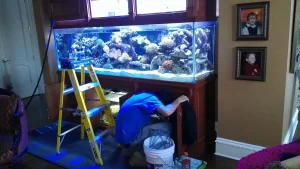
Professional aquarium maintenance becomes essential when tank cleaning feels overwhelming, especially with oversized systems. Routine maintenance requires testing and changing water, cleaning tanks and equipment, and replacing filter media—a big job that needs proper execution.
Every team member is qualified to maintain even the highest-end systems, ensuring experienced hands touch your aquarium. We specialize in all aquatic ecosystems—freshwater, planted, saltwater, and reef—serving both commercial and residential clients.
Our maintenance includes monitoring water chemistry and fish health while performing thorough white-glove cleaning services, handling delicate filtration system maintenance so you can simply enjoy your tank. This comprehensive approach ensures long-term aquarium success.
Long-Term Water Quality Management Systems
Structured maintenance schedules prevent nitrate buildup and support balanced aquarium environments through regular water changes, tank cleaning, and parameter testing. Every aquarium contains distinctive traits requiring tailored maintenance schedules that suit your tank’s unique characteristics.
Maintaining healthy nitrifying bacteria colonies should be every fishkeeper’s first priority, but anaerobic bacteria can remove nitrate by converting it to nitrogen gas in low-oxygen environments with adequate water flow. We understand how to balance these biological systems effectively.
Advanced filtration systems now include automated self-cleaning filters and AI-powered monitoring systems that increase reliability and efficiency. Smart aquarium technology provides automation and monitoring features for real-time water parameter adjustments, feeding schedules, and lighting conditions.
We often provide RO/DI water delivery, bringing the same high-quality water used in professional systems directly to your home. This eliminates the complexity of maintaining water purification systems while ensuring optimal water quality.
Long-term success requires understanding that the battle against nitrates never ends—as long as fish are eating and producing waste, nitrate levels will continually rise unless you act, making regular monitoring and reduction essential.
Advanced Equipment Maintenance and Monitoring
While expert maintenance is always recommended for optimal results, learning basic periodic tasks can potentially save fish lives. Daily monitoring should include checking that all fish are present and behaving normally, testing pH and nitrate levels, and performing small percentage water changes.
We use intake sponge filters that trap debris before it reaches main filtration systems, allowing easy cleaning without disassembling entire filter units. Effective water changes require gravel siphons to remove substrate debris, working methodically to clean all substrate areas.
Smart water treatment systems with IoT-enabled real-time monitoring are driving market growth, providing mechanically-driven automated solutions. Smart technology integration allows aquarium enthusiasts to spend less time on maintenance and more time enjoying their underwater worlds through apps and automated systems.
Our technicians are qualified to maintain even the highest-end systems, ensuring any hands touching your aquarium come with years of experience. We operate seven days a week, handling both routine maintenance and aquarium emergencies.
Equipment monitoring extends beyond basic cleaning. Accurate nitrate testing determines if biological systems are effectively reducing nitrates, requiring weekly testing for established tanks and every 2-3 days for new setups. Our maintenance ensures these complex systems work harmoniously.
Choosing Professional Aquarium Maintenance in Suffolk County, NY
The aquarium industry shows significant growth and value, expected to continue growing over the next few years, but when life gets busier, aquarium maintenance often suffers, making professional rehabilitation services essential for restoring neglected tanks.
The aquarium maintenance services market is expected to reach $1.62 billion by 2027, reflecting growing recognition that professional care delivers superior results. Superior aquarium care companies maintain 100% client retention rates, with nearly half of clients coming from dissatisfaction with previous providers.
We offer expertise that goes beyond basic cleaning. Our knowledgeable team sources compatible fish, corals, and equipment while creating custom solutions for any aquarium challenges. When you’re ready to transform your aquarium maintenance from a source of stress into a source of joy, consider reaching out to Island Fish & Reef for comprehensive aquarium care that keeps your aquatic ecosystem thriving year-round.