Summary:
You didn’t set up a beautiful tank just to stress over it every week. But somewhere between the water changes, the algae that keeps coming back, and the water test you keep meaning to do, the hobby starts feeling more like a chore than a passion. For a lot of Nassau County aquarium owners — people with demanding jobs, long commutes, and not enough hours in the day — the question isn’t whether to hire a professional. It’s whether they’ll be hit with a bill they didn’t see coming. That fear is exactly what we’re here to address. Here’s what professional fish tank maintenance actually covers, what costs extra, and how to budget for it without guessing.
What's Included in a Standard Fish Tank Maintenance Service Cost
The biggest source of frustration between aquarium owners and service companies isn’t the price itself — it’s the surprise. When you don’t know what a standard visit includes, every line on the invoice feels questionable. So let’s clear that up first.
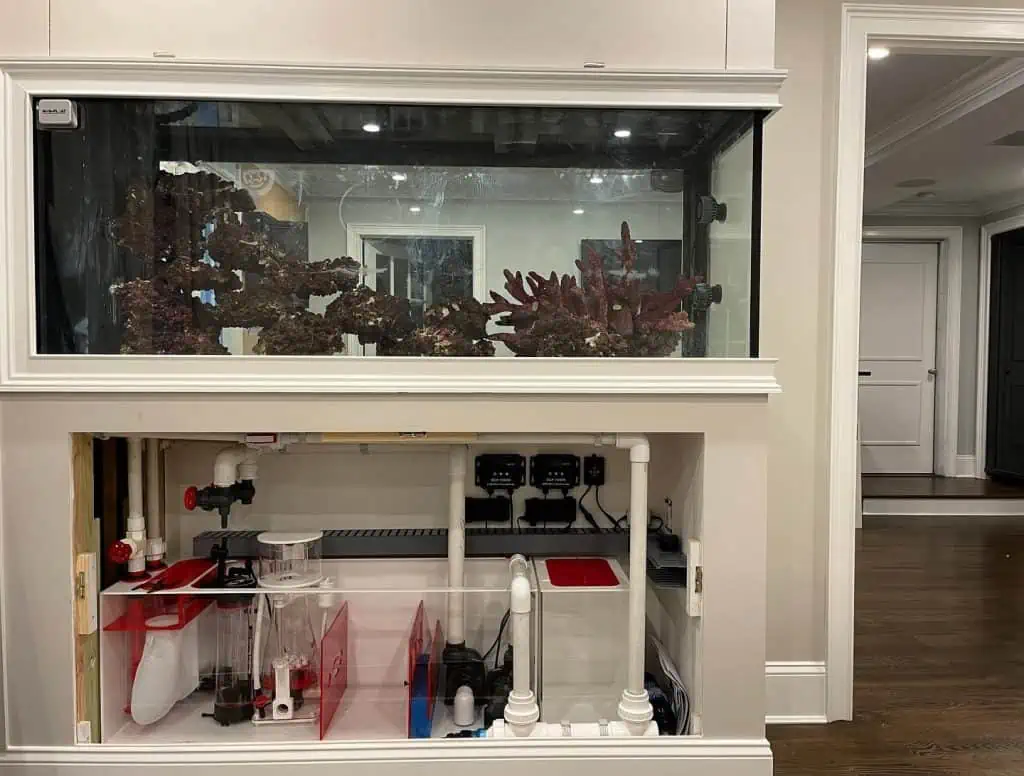
A professional aquarium maintenance visit covers far more than wiping down the glass. At a minimum, it includes water parameter testing, a partial water change, algae removal, filter inspection and servicing, equipment checks (heaters, pumps, lighting, return lines), and a health evaluation of your livestock. For saltwater systems, that also means cleaning the protein skimmer and monitoring the additional chemistry parameters that reef tanks demand.
A good technician also logs your parameters visit-by-visit, building a health history for your tank that makes problems easier to catch before they turn into emergencies. This documentation becomes invaluable if something goes wrong between visits — you’ll have a clear record of how your tank was trending.
Fish Tank Maintenance Service Cost: What's Included vs. What Gets Billed Separately
This is the question most service companies don’t answer upfront — and it’s the one that causes the most friction. Understanding the line between standard visit scope and billable extras isn’t complicated, but it does require someone to spell it out clearly.
What’s typically included in a standard visit: water testing and parameter logging, a partial water change (usually 10–25% of tank volume), glass or acrylic cleaning, filter media inspection and rinsing, equipment checks, and livestock health evaluation. For saltwater and reef systems, protein skimmer cleaning is standard as well. These are the recurring, predictable tasks that keep a tank stable — the baseline of what you’re contracting for.
What typically triggers a separate charge: replacement parts (a new pump, heater, or filter media that’s beyond routine maintenance), disease treatment (medications, quarantine procedures, or livestock replacement after a health event), and major equipment repairs or upgrades. Emergency visits outside your scheduled service window may also be billed differently, depending on the provider. These aren’t gotcha charges — they’re legitimate costs that arise from unpredictable situations. The key is knowing in advance that they exist.
The reason this matters so much is that aquarium owners often conflate the service fee with all-in coverage. A $150 visit doesn’t mean you’ll never pay more than $150. It means that for $150, your technician handles the predictable, routine work that keeps your tank healthy. If your return pump fails during that visit, the pump itself is a separate cost. We’ll tell you this before we sign anything — and get your approval before replacing anything that adds to the bill.
One thing worth knowing: we document everything. A detailed scope of work, equipment inventory, and explicit list of exclusions aren’t just professional standards — they’re the difference between a billing dispute and a long-term client relationship. If a company can’t tell you exactly what a standard visit covers before you hire them, that’s the first warning sign.
When DIY Maintenance Costs More Than Hiring a Professional
A lot of Nassau County aquarium owners start with the assumption that maintaining their own tank saves money. And for a basic freshwater setup with hardy fish, that might hold up — for a while. But the math changes quickly once you factor in everything DIY actually costs.
Testing kits, replacement filter media, salt mix for saltwater systems, RO/DI water or a filtration unit to produce it, and the time spent researching every parameter swing — these costs add up faster than most people track. More importantly, they don’t account for the cost of getting it wrong.
Water chemistry is unforgiving. Even 0.5 ppm of ammonia can kill sensitive fish within 24 to 48 hours. In a high-bioload tank — the kind that comes with a serious reef setup or a well-stocked community tank — the nitrogen cycle can collapse within a week or two of inconsistent maintenance. By the time fish start showing visible symptoms, the crisis is often already well underway.
For reef tank owners in particular, the livestock at risk often represents a significant financial investment. Rare corals, clownfish pairs, wrasses, and other marine species can easily total $500 to $2,500 or more in a single residential system. A single tank crash — the kind that a professional visit might have prevented — can cost more than a full year of service. When you look at it that way, professional maintenance isn’t an added expense. It’s risk management.
There’s also the time factor. If you’re catching the Long Island Rail Road into the city five days a week and managing a full household, the idea of squeezing in a proper weekly or biweekly tank maintenance session isn’t just inconvenient — it’s unrealistic. The tank suffers. The fish suffer. And eventually, so does your enthusiasm for the hobby.
Salt Water Aquarium Maintenance: Why It Costs More in Nassau County
If you’ve ever gotten a quote for saltwater aquarium maintenance and felt surprised by the number, you’re not alone. Saltwater and reef systems cost more to maintain than freshwater tanks — not because service companies charge arbitrarily more, but because the work itself is genuinely more complex and more demanding.
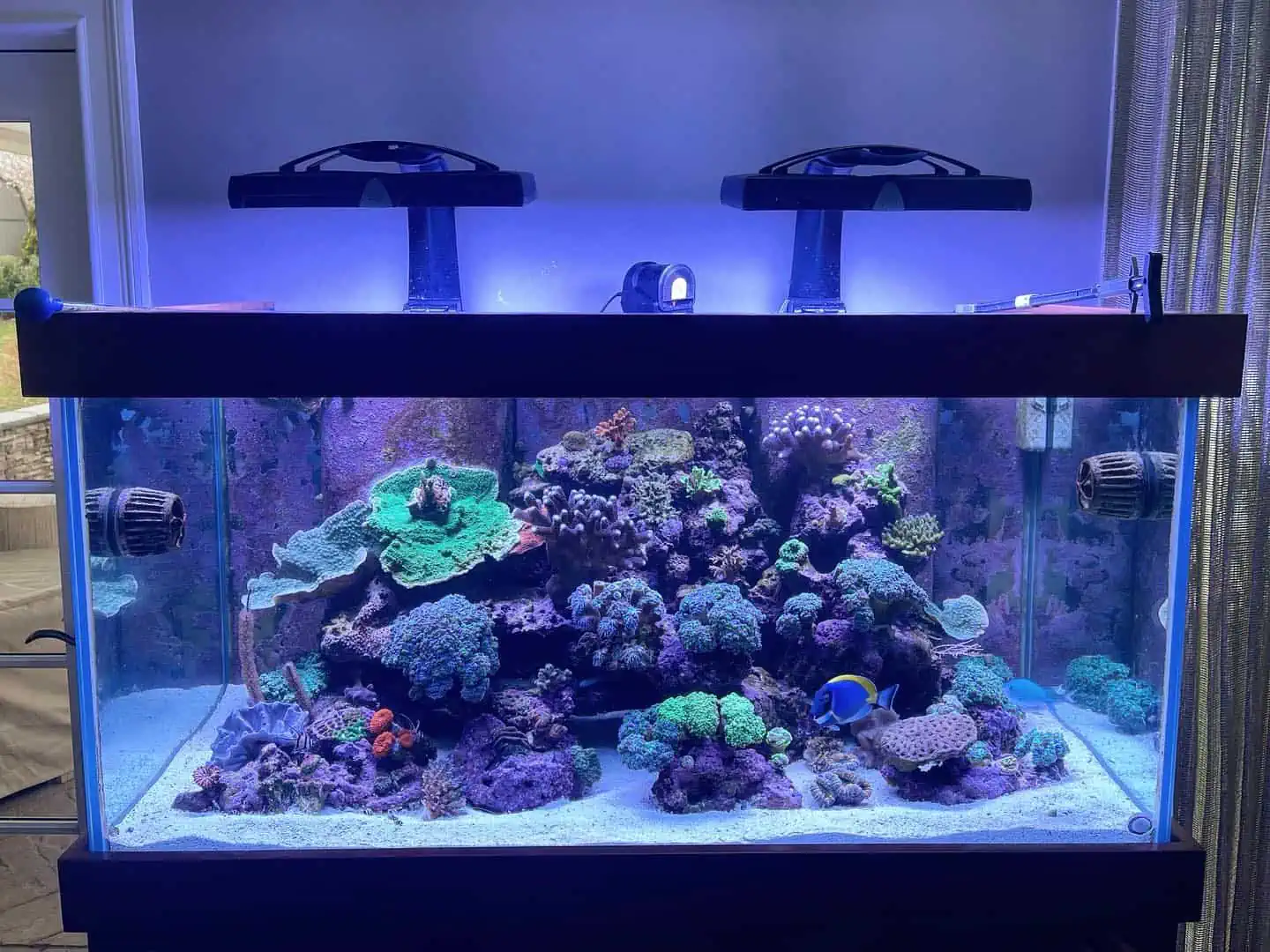
The chemistry of a reef tank doesn’t sit still. Calcium, alkalinity, magnesium, salinity, pH — these parameters interact with each other and with your livestock in ways that freshwater systems simply don’t. A swing that would be minor in a freshwater tank can be catastrophic in a reef environment. Coral is especially sensitive, and experienced reef keepers know that stability is everything.
What Drives the Cost of Professional Reef Tank Maintenance
Beyond the complexity of the chemistry, saltwater maintenance involves equipment that freshwater systems don’t require. Protein skimmers need regular cleaning to function properly — a neglected skimmer stops removing organic waste from the water column, which compounds every other parameter problem in the tank. Calcium reactors, dosing pumps, and automated top-off systems all require inspection and adjustment. Salt mix itself is a consumable cost that adds up over time, especially for larger systems.
Professional freshwater maintenance visits typically run $75 to $150. Reef tank visits typically run $150 to $300. That difference reflects the additional time, materials, and technical knowledge required to properly service a marine system.
For Nassau County, NY reef owners specifically, there’s another layer worth understanding: local water quality. Nassau County municipal water is treated with chloramine rather than chlorine, which requires different dechlorination chemistry than what most generic aquarium guides recommend. Chloramine doesn’t off-gas the way chlorine does, and if it’s not properly neutralized before a water change, it can damage the beneficial bacteria in your biological filtration.
We handle this correctly every time. A DIY owner following a generic YouTube tutorial often doesn’t know to check. That’s one of the real advantages of working with someone who knows Long Island’s water chemistry inside and out.
The bottom line on reef maintenance costs is this: the more valuable your livestock and the more complex your system, the more a professional visit is worth. Not just for the work performed, but for the expertise applied to it.
How to Choose an Aquarium Maintenance Company in Nassau County
Not all aquarium service companies are the same, and the differences matter more than most people realize when they’re first shopping around. Here’s what to actually look for — beyond the price quote.
Years in business is a real signal in this niche. Aquarium maintenance isn’t a field where you can fake your way through a decade of client relationships. Companies that have been operating for 20 years or more have seen equipment failures, disease outbreaks, tank crashes, and unusual livestock — and they’ve developed the judgment to handle them. That experience doesn’t show up on a rate card, but it shows up when something goes wrong at 7 a.m. on a Saturday.
Licensing and insurance matter more than most people check. When a technician is inside your home working with expensive equipment and live animals, you want to know they’re covered. Ask directly. A reputable company will answer without hesitation.
Consistency of technicians is something clients consistently mention in reviews — and for good reason. Your tank has a history. Its quirks, its livestock, its parameter tendencies — a technician who’s been visiting for months or years knows things about your system that a rotating roster of strangers never will. Named, consistent technicians are a sign of a company that retains good people and assigns them thoughtfully.
For commercial clients — medical offices along Hempstead Turnpike, restaurants near Sunrise Highway, corporate lobbies throughout Nassau County — the credibility bar is higher. You need a company that’s insured, professional in appearance, and capable of maintaining a display system that reflects on your business every single day it’s running. Institutional credentials, like a university-scale installation, tell you something about what a company can actually handle.
Finally, ask about emergency availability. A tank doesn’t crash on a schedule. A service company that operates seven days a week and can respond when something goes wrong is worth more than one that’s only reachable Monday through Friday during business hours.
What Professional Fish Tank Maintenance Should Actually Look Like
Here’s the short version: a professional maintenance visit is not just cleaning. It’s water testing, parameter logging, equipment inspection, filter servicing, livestock health evaluation, and the expertise to catch a problem before it becomes a loss. What gets billed separately — replacement parts, disease treatment, emergency calls — should be explained to you before you sign anything, not discovered on your first invoice.
Saltwater and reef systems cost more to maintain because they require more. That’s not a surprise if you understand what’s actually involved. And for Nassau County aquarium owners dealing with local water chemistry, demanding schedules, and high-value livestock, professional service isn’t a luxury — it’s what keeps the tank running the way it’s supposed to.
If you’re ready to stop guessing and start working with a team that’s been doing this on Long Island since 2003, we’d welcome the conversation.